Hot Water Cylinder Insulation
You heat water once. Then it sits there. It cools down slowly, almost without you noticing.
Without proper insulation, your boiler fires up again and again. That’s heat loss and wasted money. Hot water cylinder insulation stops that cycle. It keeps heat where it belongs. And it trims your energy use without you lifting a finger.
How Hot Water Cylinder Insulation Prevents Energy Loss
Let’s talk about what actually happens inside that tank.
You heat water to 60°C. All good. But then? Heat escapes through the cylinder walls. Not all at once. Gradually. A few degrees per hour. Before you know it, your water’s lukewarm. Your thermostat notices. The boiler kicks in. And you’re reheating water you already paid to heat.
That’s standby heat loss. And it’s a silent killer of efficiency.
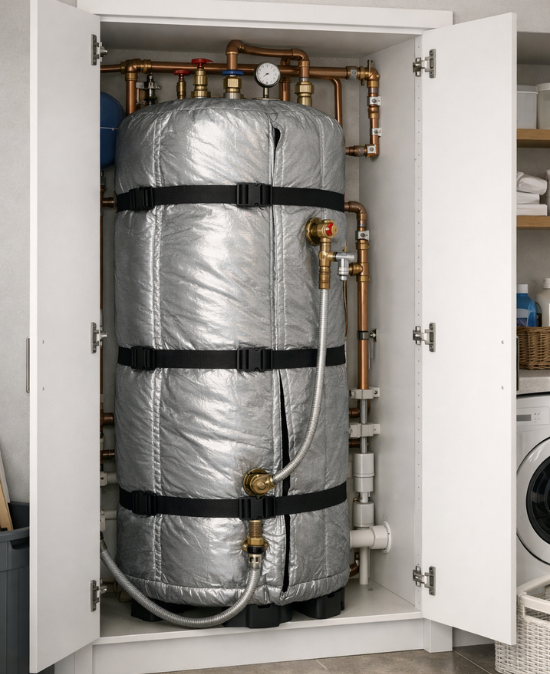
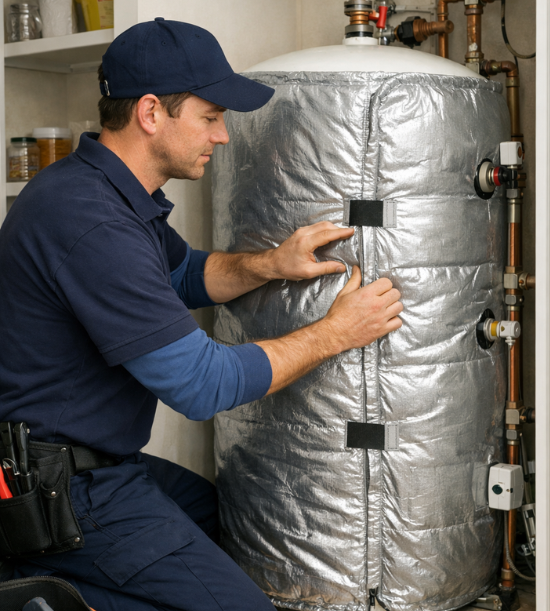
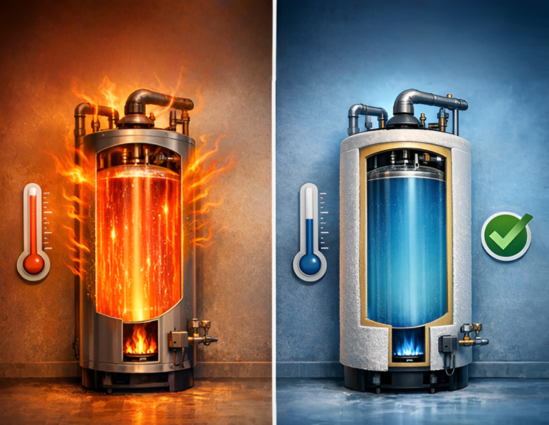
Here’s where a hot water cylinder insulation jacket changes the game. Think of it as a thick blanket wrapped around your tank. It slows heat escape. Dramatically. Your water stays hotter for longer. The boiler stays off for longer. Fewer reheating cycles. Less gas or electricity is burned for no good reason.
Now, not all cylinders are created equal. A modern factory-insulated hot water cylinder comes with foam built into the walls. High-performance stuff. But older tanks? Bare metal. Or maybe a tired, thin jacket that’s seen better days. If your cylinder feels warm to the touch, your insulation is failing.
What proper insulation gives you:
- Reduces standby heat loss by 75% or more
- Keeps stored water hot for up to 12 hours longer
- Cuts the reheating frequency in half
- Improves overall system efficiency without upgrades.
A quick word on hot water cylinder insulation thickness, most quality jackets sit around 75–80mm. That’s the sweet spot. Anything thinner and you’re leaving savings on the table. And hot water cylinder insulation regulations? UK building rules (Part L) expect cylinders to meet minimum loss standards. If yours doesn’t, you’re not compliant. And you’re definitely not efficient.
What Changes When Heat Is Retained Properly
Picture your morning routine before insulation.
You wake up. Run the tap. Wait. The water’s warm but not hot. The boiler fired up twenty minutes ago because the cylinder lost its heat overnight. Annoying, right?
Now picture after.
You turn the tap, hot water. Almost instantly. Because the cylinder held its temperature. No waiting. No topping up. Just consistency.
An insulating jacket for a hot water cylinder transforms your daily experience in ways you don’t see but absolutely feel. Hot water stays available longer, meaning the second shower of the morning doesn’t turn into a cold shock. Less frequent reheating means your boiler isn’t chattering away at 3 am. Reduced energy usage happens automatically. And you get a more consistent supply without touching the thermostat.
It’s one of those rare upgrades that works silently. No behaviour change required. Just better performance.
Why Insulation Still Matters in UK Homes
Here’s something nobody talks about enough.
The UK has some of the oldest housing stock in Europe. Millions of homes still run hot water cylinders from the 80s or 90s. Back then, insulation standards were weak. A thin layer, if anything.
Now energy prices are high. Those old cylinders leak heat all day, even when not in use. That wasted heat turns into wasted money.
Hot water cylinder insulation grants UK schemes exist for this exact gap. People upgrade lofts and windows, but forget the airing cupboard.
If your cylinder predates 2005, its insulation is likely poor. That means your system works harder and costs more to run.
What poor insulation leads to:
- Constant heat loss
- Higher energy bills
- More strain on your boiler
- Lower overall efficiency
Ofgem-backed and local authority schemes include this upgrade because it’s simple, quick, and delivers instant savings.
Small Upgrade That Reduces Ongoing Energy Waste
Let me be blunt.
You can spend thousands on a new boiler. Or a heat pump. Or solar panels. All good things. A poorly insulated hot water cylinder means energy is lost every single day.
Adding or upgrading an insulation hot water cylinder is the smallest investment with the fastest payback. We’re talking months, not years.
Here’s what that looks like over time:
- Lower energy bills – not a one-off saving, but month after month
- Reduced system workload – your boiler cycles less, which means less wear
- Improved energy efficiency – without changing how you use hot water
- Zero behaviour change – set it and forget it
An insulation jacket for a hot water cylinder typically costs between £15 and £40 if bought retail. Grants bring that to zero. And the annual savings? Up to £70–100 depending on your fuel type. That’s a 200%+ return in year one.
Name another home improvement that does that. You can’t.
Why Heat Retention Supports the Entire Heating System
This is where people get it wrong. They think cylinder insulation only affects the cylinder. But your whole heating system is connected. Every part talks to every other part.
Here’s how.
Your boiler’s job is to heat water to a set temperature and then stop. But if the cylinder loses heat too fast, the boiler never gets to rest. It short-cycles. Fires up for five minutes. Shuts off. Fires up again. That’s inefficient. It’s also hard on components – pumps, valves, even the heat exchanger.
Better hot water cylinder insulation changes that equation. The cylinder holds temperature. The boiler stays off for longer stretches. When it does fire, it runs a full, efficient cycle instead of fragmented short bursts.
Less strain on the boiler. Longer life for the whole system. Better efficiency across the board.
Even hot water cylinder insulation regulations (again, Part L of Building Regulations) recognise this system-level benefit. That’s why new cylinders must meet minimum insulation standards. And why retrofitting an insulation jacket for a hot water cylinder to an older tank is considered a compliant improvement.
You’re not just insulating a cylinder. You’re protecting your entire heating investment.
Hot Water Cylinder Insulation Grants Eligibility
Final Thought Before You Go
Most energy waste in homes isn’t dramatic. It’s not a broken boiler or a gaping hole in the roof. It’s slow, steady, invisible heat loss from a cylinder you never think about. A jacket won’t change your life. But it will quietly lower your bills, year after year. And that adds up.
Frequently Asked Questions
It’s a wrap around your tank that helps trap heat inside. When heat stays put, your system works less, and your bills don’t creep up.
It does, because less heat escapes in the first place. Your boiler runs less often, which cuts down what you spend over time.
Most homes need around 75–80mm for it to work well. Anything thinner or worn out won’t hold heat for long.
There are rules that limit how much heat a cylinder can lose. Older setups often fall short, which means more waste than you’d expect.
Usually, yes, as long as the tank is still sound. Get the size right and fit it properly, or it won’t do much.