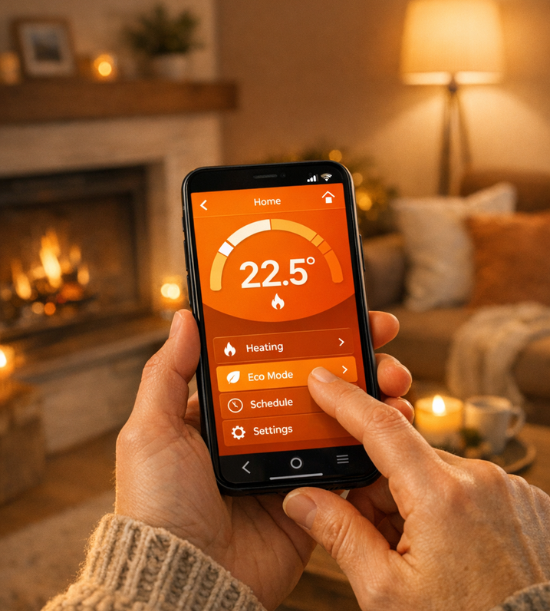
Smart Heating Controls
Smart Heating Controls put you back in charge of your home’s warmth. You get less waste, less stress, and heating that works around you, not the other way around.
How Smart Heating Controls Change Daily Living
Let’s be honest. Most heating systems act as if they live in a different century. You set a schedule in October. Forget about it. Then wake up sweating in March because the boiler still thinks it’s freezing outside.
That’s not control. That’s a gamble.
A smart heating system flips the script. Instead of running on guesswork, it runs on what’s actually happening. Rooms that nobody uses? Stay cold. Do you leave work early? The heat greets you at the door. No more warming an empty house for three hours because you were stuck in traffic.
Here’s what a modern smart heating control setup typically includes:
- A smart thermostat that learns or adapts
- Wireless sensors for individual rooms
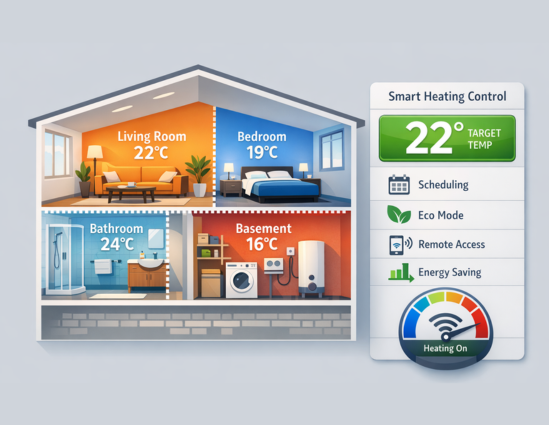
- Zoning so upstairs isn’t a sauna while downstairs is a fridge
- Phone-based control that works from anywhere
The outcome? Smart Heating Controls strip out the stupidity. No more heating the garden. No more coming home to an icebox. Just simple, responsive warmth that moves with your life, not the other way around.
What Changes When Heating Becomes Smarter
Before? You’d crank the dial. Wait twenty minutes. Then either bake or shiver.
After? It just works.
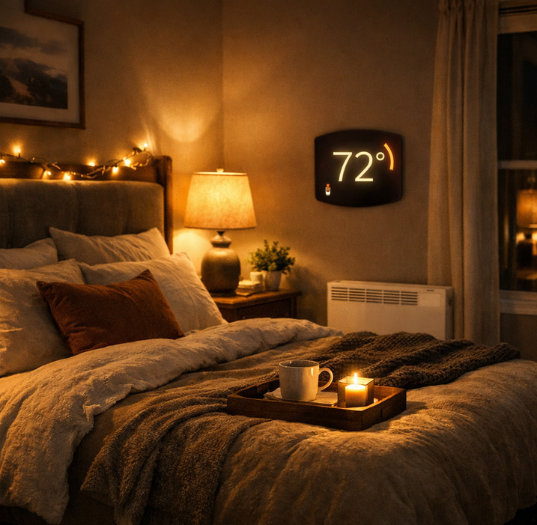
Subtle thing, that. You stop thinking about temperature altogether. The radiators don’t clank on at 6 am if everyone’s still asleep. The bedroom stays cooler at night because sleep scientists keep telling us that’s better, and now your heating actually listens.
It’s not a revolution you see. It’s a revolution you don’t notice. And honestly? That’s the whole point.

Why Smart Heating Matters in UK Homes
Let’s talk reality. The UK climate isn’t dramatic; it’s just persistently damp and cold for months. That constant grey chill eats energy. And energy costs have gone absurd. A smart central heating controller isn’t a luxury anymore. It’s closer to common sense.
Old systems blast heat everywhere at once. A smart heating control system asks:
Does this room need warmth right now?
If the answer’s no, nothing happens. That’s where the savings hide. Rising costs aren’t going to reverse. But waste? That you can cut. UK homes waste roughly 20–30% of heating energy on empty rooms or bad timing. A smart setup trims that fat without you lifting a finger.
Plus, grants exist. You don’t always have to pay retail. That’s what the next sections cover.
Better Comfort With Smarter Heating Systems
Comfort isn’t about being warm. It’s about being warm when you want to be.
With smart home heating, you stop wrestling with schedules. You stop shouting, “Why is it boiling in here?” while opening windows in January. That’s just burning money.
The best smart heating controls feel simple. You set them once, and they just work. They adapt. You forget they exist. Then one day you realise: you haven’t touched a thermostat in weeks. The house just stays nice.
That ease changes things. Less arguing about temperature. Less guilt about wasted gas. More “this is fine” moments.
Smart Heating Solutions That Fit Your Home
No two houses are the same. A Victorian terrace with single-glazed windows behaves totally differently from a 1950s semi with cavity wall insulation.
That’s why smart heating solutions need to flex.
Some homes do well with a single smart thermostat and radiator valves. Others need full zoning upstairs, downstairs, maybe even a separate zone for that extension that always feels like a fridge.
The best smart heating approach isn’t about one magic box. It’s about matching the system to your habits. Whether you’re a night owl, a remote worker, or living with elderly relatives who need steady warmth. Different lives need different setups.
Good news? Most modern systems work with what you already have. No need to rip everything out.
Smart Heating Grants Eligibility
Your Next Step to Better Heating
Heating shouldn’t feel like guesswork. It either fits your life, or it wastes your money. Smart control changes that quietly. No big learning curve. No daily fiddling. Just a home that reacts when it should and stays out of the way when it shouldn’t.
You won’t notice it working. That’s the point. What you will notice is this: fewer small annoyances, fewer wasted hours of heat, fewer moments of “why is it like this?” If your current setup still runs on habit instead of logic, it’s already behind. Check where you stand. See what’s possible. Then decide if it’s time to stop heating empty space.
Frequently Asked Questions
They replace your basic timer and thermostat with a smarter version. Think: phone control, learning your routines, room-by-room heating. Some use geofencing so your heating knows when you’re ten minutes from home and fires up automatically.
Yes, through schemes like ECO4 and the Great British Insulation Scheme. Eligibility usually depends on your property’s energy rating, whether you receive certain benefits, or if your current system is inefficient. Smart Heating Controls are often covered under grant upgrades.
They cut waste. You’re paying for waste right now. Heating empty rooms, forgetting to turn things down, and using schedules that don’t match your life. Most people see 15–25% less gas use just from better timing and control.
There isn’t one universal “best.” For renters, something simple like a smart thermostat. For homeowners, full zoning with radiator controls. Popular brands include Hive, Tado, Nest, and Drayton Wiser. The right one depends on your home layout and whether you want to tinker or set-and-forget.
Absolutely, but with a caveat. Older homes with big draughts or no insulation won’t perform as well. Smart controls still help, but pairing them with basic draught-proofing makes a much bigger difference. Think of it as teamwork.