Am I Eligible for UK Home Energy Grants? A Step-by-Step Guide
Written by: Energy Efficient You
Published: 13th February 2026
Introduction
Energy bills are rising constantly, and the alteration of rules is becoming frequent. You are stuck with a very simple question: Am I eligible? This guide is the answer to these questions in a simple and positive way. It mainly talks about the eligibility for UK home energy grants, explains the main schemes, and provides a very handy, four-step checklist that you can start using today. No jargon. No fluff. Just what matters are household facts, property checks, and how to get a professional assessment.
UK Home Energy Grants Eligibility – How the System Works
Why Eligibility Isn’t Based on One Factor
Eligibility for grants is rarely a single-number test. UK home energy grants eligibility is judged on a few things together:
- Household circumstances (income, size, vulnerability),
- Property energy performance (EPC band, wall type),
- Heating or insulation needs.
People often assume they don’t qualify and rule themselves out too early. In reality, working households and homeowners can still be eligible when everything is assessed together.
The Role Of Government-Backed Schemes
Most help comes through approved programmes and installers. These UK government home energy grants will not be given to you as a cash payment. They will cover the cost of certain upgrades, for example, insulation, new boilers, or heat pumps, done by certified providers. The purpose is to reduce the number of homes in fuel poverty and also to lower carbon emissions across the whole housing stock.
Understanding the UK Energy Grant Scheme Landscape
What is a UK Energy Grant Scheme?
A UK energy grant scheme is public funding that covers part or all of an upgrade. Think of it as targeted funding for approved measures. It differs from loans or rebates. You won’t get a cheque; the work gets paid for directly, or part-paid, by the scheme.
Why Schemes Change Over Time
Policy shifts, budget cycles, and new climate targets mean rules are in flux. That’s why current checks beat old assumptions. If you read a five-year-old guide online, treat it cautiously (ask someone trusted to confirm).
ECO4 Scheme Eligibility Explained in Simple Terms
What The ECO4 Scheme is Designed To Do
ECO4 focuses on improving the least efficient homes. The main goal is pretty straightforward: cut down on the energy usage of the homes that are most in need. Typically, when folks inquire about ECO4 scheme eligibility, they’re basically wondering if their home and situation align with the scheme’s focus areas.
Who Eco4 is Most Aimed At
ECO4 prioritises:
- Low-income households,
- People in vulnerable situations (e.g., older residents, health issues),
- Homes with poor EPC ratings.
But being on benefits isn’t the only route. The scheme looks at need and outcome.
Property Requirements Under ECO4
EPC rating, wall construction (solid vs cavity), and existing heating all matter. A low EPC score helps. Solid wall homes often need different measures than cavity homes, and that affects what funding is available.
Who Qualifies for Energy Grants UK? Personal Eligibility Criteria
Income and Household Circumstances
Eligibility isn’t about exact pay packets. Schemes use thresholds and contextual checks. Household size, dependents, and medical needs can change the assessment. If you’re asking who qualifies for energy grants UK, think beyond income alone.
Benefits-Based Qualification
Receiving certain benefits can make the assessment smoother. But benefits alone don’t guarantee a grant. They are one part of the picture.
Employment Status Myths
Working does not necessarily exclude you. What matters is whether upgrades are needed and whether the household would benefit materially from the improvement.
Property-Based Checks That Affect UK Home Energy Grants Eligibility
EPC Ratings and Energy Performance
EPC bands are shorthand for how leaky a home is. Lower bands (E, F, G) get priority because they save the most energy when upgraded. This is central to UK home energy grants eligibility.
Property Type and Construction
Solid-wall houses, older terraces, and poorly insulated flats are often top candidates. Age and construction define which measures are viable and which installers will quote.
Existing Measures and Upgrade History
If you already have loft insulation or a newer boiler, schemes will check what remains to be done. Previous work doesn’t rule you out; it just changes what is funded next.
Step-by-Step Guide to Checking Your Eligibility
Step 1 – Gather household information
Write down:
- Income range,
- Benefits (if any),
- Household size,
- Any vulnerability (health, age).
Step 2 – Review property details
Check your EPC, note wall type (solid/cavity), and list current heating measures.
Step 3 – Match against current grant criteria
Compare facts to scheme descriptions (ECO4 and other programmes). If you need help, an approved provider can run the check for you.
Step 4 – Speak to an approved provider
A quick home visit or filling out a form online can determine if the measures are eligible. Officially certified installers are up to date with the requirements of UK government home energy grants and, thus, they can often expedite the process.
Common Reasons Grant Applications Are Rejected
Incorrect Self-Assessment
Many applications fail before they even start. People look at one detail, income, employment, or home type and decide they won’t qualify. That decision is often wrong. Grant eligibility is assessed as a whole, not on a single factor. When people opt out early, they never give the scheme a chance to review the full picture.
Incomplete or Inaccurate Information
Small gaps cause big delays. An old EPC, missing proof of residence, or incomplete household details can pause an application without warning. Grant schemes depend on verified data. If something doesn’t line up, progress stops.
Property Constraints
If you already have loft insulation or a newer boiler, schemes will check what remains to be done. Previous work doesn’t rule you out; it just changes what is funded next.
Conclusion
Don’t write yourself off. UK home energy grants eligibility is nuanced and often wider than people expect. Look at household facts and property details together. Use the four-step checklist above. If you want an honest check, ask an approved provider to confirm they’ll tell you what’s likely and what’s not. That small step saves time, confusion, and (sometimes) money.
Frequently Asked Questions
- Can homeowners and tenants both apply?
Yes. Tenants may need landlord consent for certain works. Homeowners generally have fewer permission hurdles.
- Are UK energy grants repayable?
Grants are not loans. They fund work that you don’t usually repay. (Always confirm terms with the scheme.)
- Can I apply if I’ve upgraded before?
Partial upgrades are common. You can still qualify for further measures depending on what’s left to do.
- How long does eligibility approval take?
Times vary. Some checks are quick; others need surveys. Plan for several weeks in many cases.
- Can I still apply if I’m working full-time?
Yes. Full-time employment does not automatically exclude you. Eligibility is based on household circumstances and property efficiency, not job status alone.
See Our Other Blogs

How Much Does External Wall Insulation Cost?
External Wall Insulation has become a popular choice for homeowners to improve energy efficiency and reduce heating costs. Also referred to as solid wall insulation, it involves adding a layer of insulation material to the exterior walls of the building. This then acts like a thermal barrier, reducing heat loss through the walls. External wall insulation is key to lowering your energy bills.

How To Calculate Energy Efficiency
Energy efficiency is a measure of how effectively energy is utilised in a system or process to accomplish a specific task. It’s about getting the most out of the energy we use and optimising performance. Whether it’s in homes or businesses, understanding and improving energy efficiency are steps toward sustainability and resource conservation.
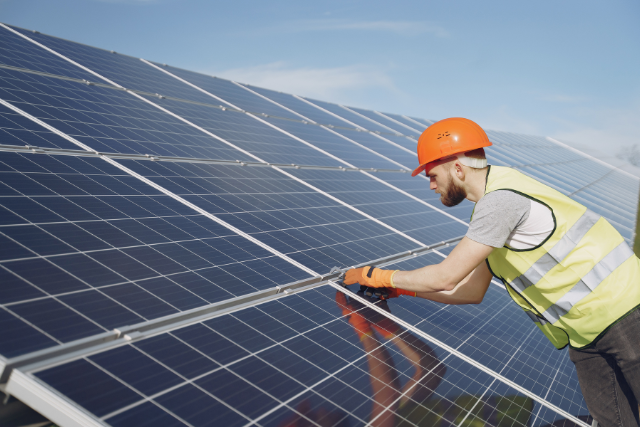
Solar PV has gained immense popularity as a clean and reliable energy source that holds the promise of reducing greenhouse gas emissions and minimising our dependence on fossil fuels. Photovoltaics (PV) has transformed the way we produce and consume electricity. Learn more about how solar pv can help save you money on your electricty bills.